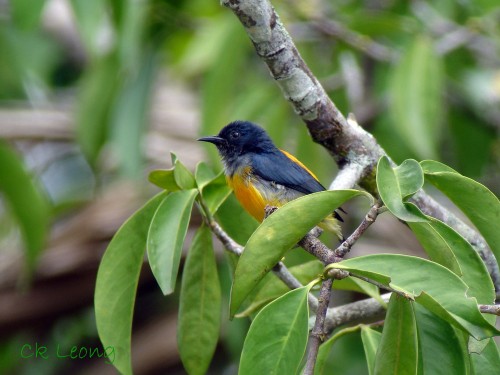
Orange-bellied Flowerpecker

Back to the cinnamon trees again, this time it is the Orange-bellied Flowerpecker Dicaeum trigonostigma flying in, snatching a single cinnamon fruit, and out again as fast as you can say Hi!  This is one of my favourite garden birds and I am sure of many proud gardeners around the Greater Sundas.  Its call is loud and its colours even louder!

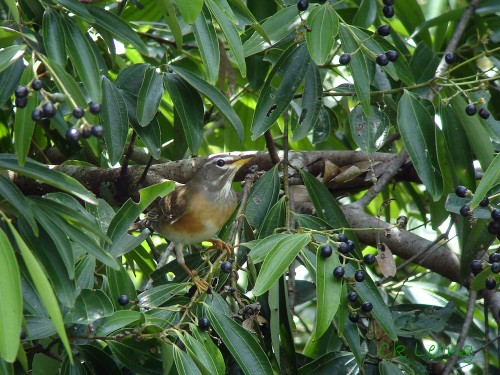
Eyebrowed Thrush

Two weeks now and the fruiting at the cinnamon trees at Poring is still attracting loads of birds.  This visiting Eyebrowed Thrush Turdus obscurus displays the same hurried feeding as the locals.  Okay he is forgiven, given that he has to make a long flight up north anytime now and is going to need bags of energy.

Feeding Frenzy

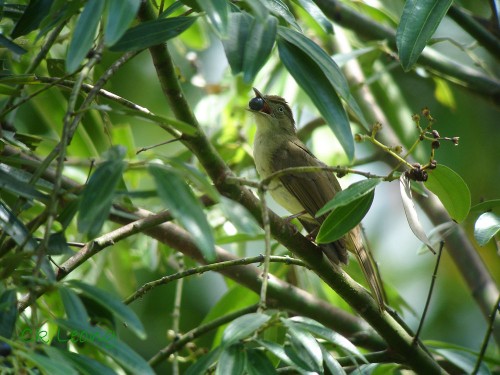
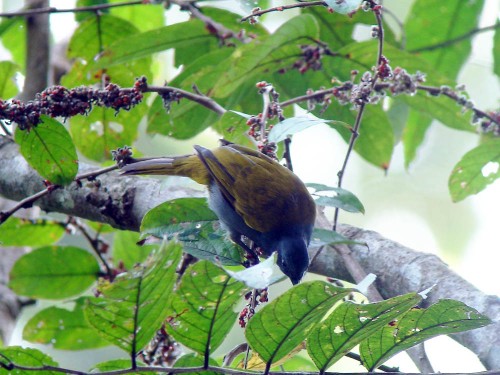
Just last month, the cinnamon trees at Poring Hot Springs in Kinabalu Park attracted a non-stop parade of birds.  No wonder, these birds can’t resist the ripe fruits of these trees.  I had a taste of the fruits and immediately decided they won’t feature in my diet.  But the constant frenzy that is the feeding birds would have you think that those would be the last fruits that the birds are going to feed on.  Either that or there is a chemical in there which made the birds hyper.  There were bulbuls (counted 7 species), flowerpeckers, Asian Fairy Bluebirds, barbets, and even migrants like the Eye-browed Thrush and Blue and White Flycatcher.

A secret (maybe not), feeding trees like those at Poring make the work of a bird guide so easy.

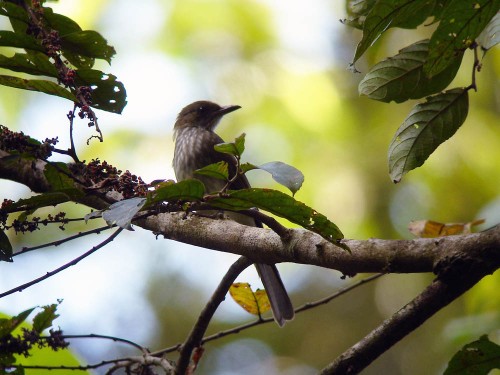
Buff-vented Bulbul

Grey-bellied Bulbul

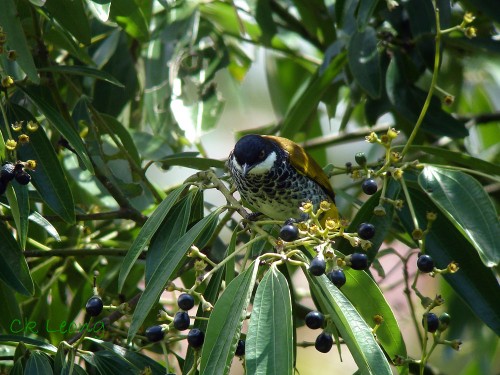
Streaked Bulbul

Scaly-breasted Bulbul

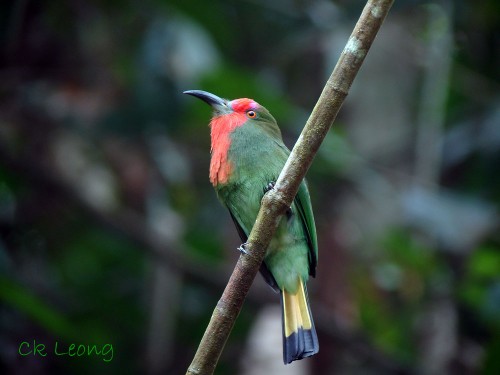
Red-bearded Bee-eater

Here’s one of everybody’s favourite, the Red-bearded Bee-eater Nyctyornis amictus. This large bee-eater is found in lowland and secondary forests, hawking for insects from its perch.  But unlike the other common bee-eater, the Blue-throated,  it almost never make flights above the forest canopy.  When looking for this bird, I found it easier just to listen for its deep kwok calls.

Alcedo Kingfishers of Borneo

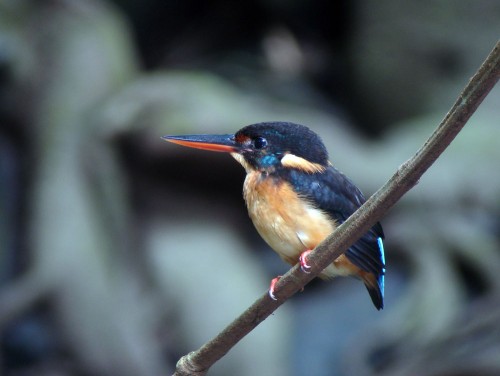
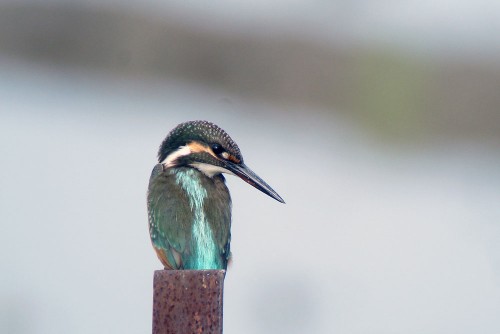
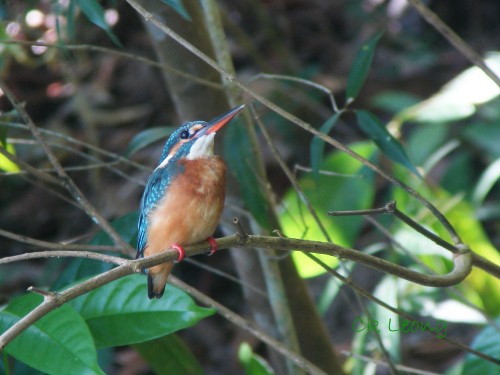
Here they are, the 3 Alcedo kingfishers found in Borneo.  These are the fishing kingfishers as compared to the slightly smaller insectivorous Ceyx species.

I find that the Blue-banded Kingfisher A. euryzona is hardest to find, being partial to clean running forest streams which are increasingly harder to come by.  The Common Kingfisher A. atthis is not that common either and it prefers the ponds and wet areas around the paddy fields.  The Blue-eared Kingfisher A. meninting seems to be seen most often, its high-pitched tseet whistle in flight giving away its presence.

I can’t decide which is my favourite, each of them so wonderful in plumage and habit.

Blue-banded Kingfisher female

Common Kingfisher

Blue-eared Kingfisher