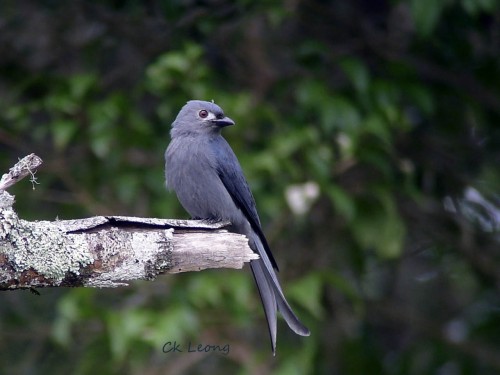
Ashy Drongo

It is very unlikely that you will miss this bird on a visit to the mountains of Borneo.  However in recent years, there has been a noticeable drop in the population of the Ashy Drongo Dicrurus leucophaeus. It is most easily seen at the edge of forest in the early hours of morning, hawking for insects.  The Bornean race stigmatops has a prominent white patch around the eyes.

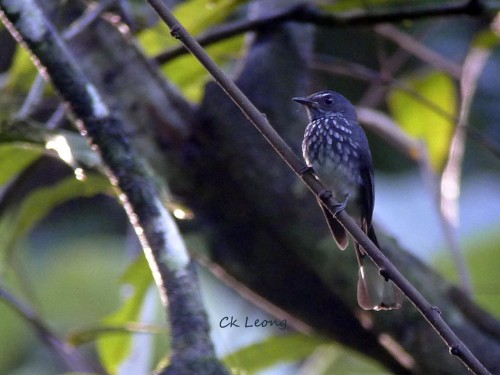
Spotted Fantail

Of the 3 fantails found in Borneo, I really think the Spotted Fantail Rhipidura perlata is the better looking!  But looks aside, there is also differences in behaviour.  I notice that the Spotted does not fan its tail as often as the other fantails and it sits in a more upright position.   Otherwise, like the others, it is an active insectivore, pursuing its prey from all angles.

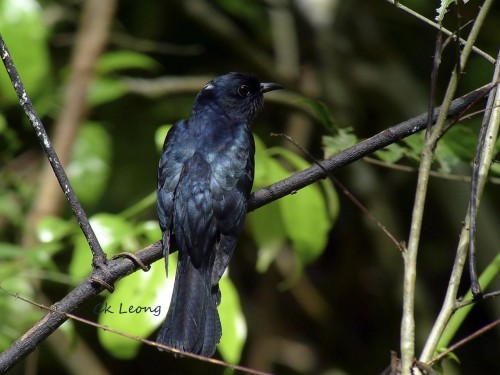
Square-tailed Drongo-cuckoo

The Square-tailed Drongo-cuckoo Surniculus lugubris has got to have one of the most recognizable calls in the lowland forest of Borneo.  The first loud pi is followed, evenly timed, by a series of ascending pi.  As is the case with other cuckoos, such calls can be heard throughout the day and sometimes at night.  Spotting it may be a bit more difficult.

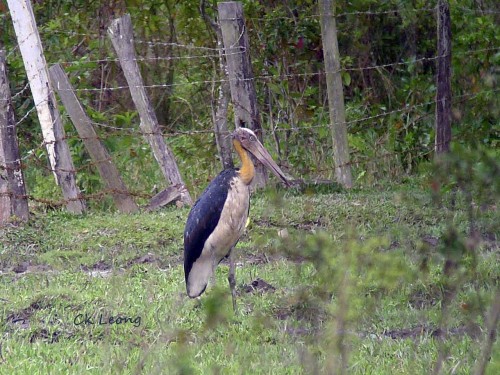
Lesser Adjutant

It was so big that I couldn’t miss.  Last week while on the road to the Wasan ricefields in Brunei, this Lesser Adjutant came into view from the window of the car driven by Roger.  What luck! we were travelling fast and it was a busy road.  After making a u-turn to return to the scene of the crime, this little patch of marsh held not one but two of the storks.  In local Malay language, it is called the bald-headed bird.  Most birders I know  give it a low score in the looks department.  But storks are getting increasingly scarce and this particular one needs more space.

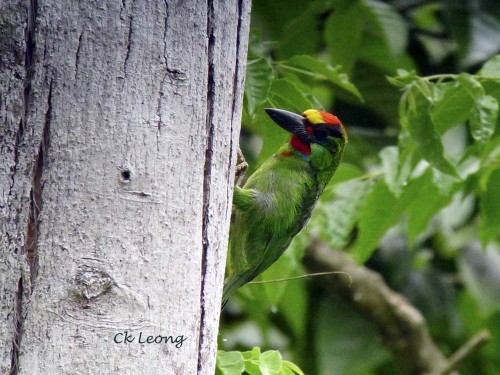
Red-throated Barbet

Red-throated Barbet male

The Red-throated Barbet Megalaima mystacophanos is a common bird of the lowland forest.  Its calls varies from a single tok to a series of 4 notes.  The single note does sound like that uttered by the Gold-whiskered Barbet.

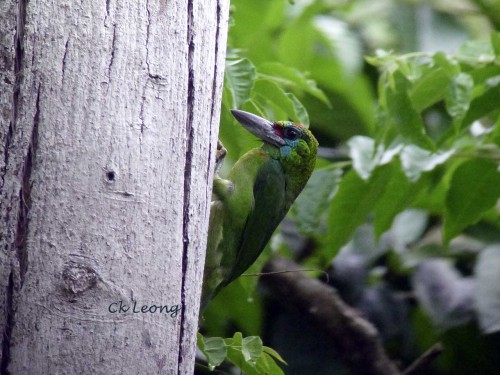
The female has been a source of confusion for some birders.  I have seen trip reports which listed the Mountain Barbet as seen in lowland forest such as Poring Hotsprings.  Both sexes of the Mountain Barbet resemble the female Red-throated which is differentiated by a small red spot at the base of the rictal bristles on each side.  For habitat, the Red-throated is replaced by the Mountain from around 1,000m in most places.

Red-throated Barbet female