Sunda Scops-owl

Sunda Scops-owl

Sunda Scops-owl

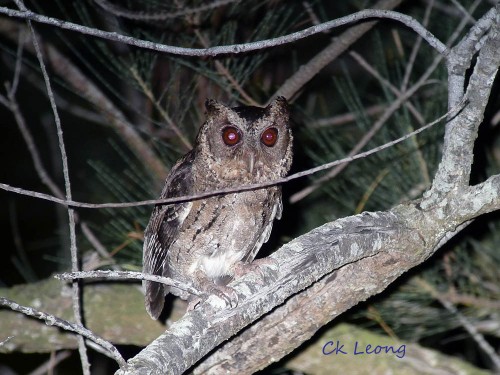
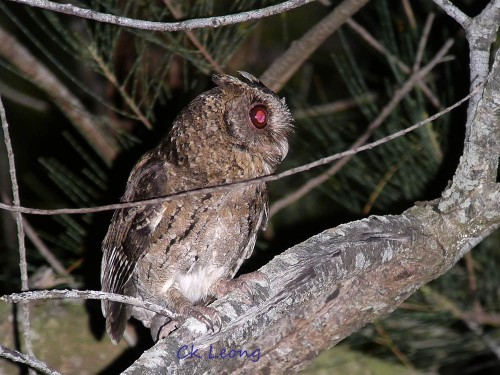
The Sunda Scops-owl Otus lempiji is probably the most common owl found in disturbed lowland forest throughout Sabah.  It is best located by listening for its whooping single call uttered at intervals of between 8 to 15 seconds.  Its size (20-23cm) might give you some difficulty in locating it though it responds readily to calls.

Taking photos of the bird in the dark required some luck (the bird stayed!).  Thanks to Brigitte, who provided the very necessary lighting assistance.  The red eyes in the photos are due to the reflection of the torch light.


Olive-winged Bulbul

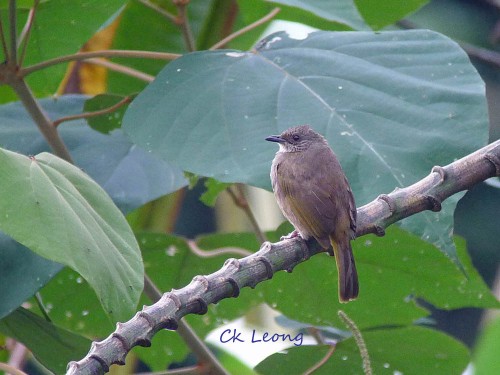
The Olive-winged Bulbul Pycnonotus plumosus is a common bulbul found in the lowlands and offshore islands but could be very easily misidentified.  The olive fringes on the wings may not be visible in low light while the Red-eyed and Cream-vented bulbuls also display red iris.  I find the quicker way is to look for the streaking on the ear coverts.

Malayan Night-heron

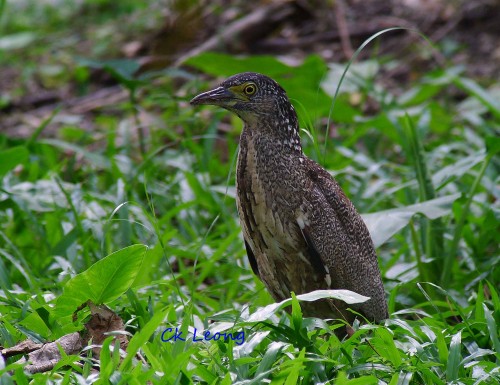
I have seen the bird in Taipei and Bangkok but it took me a long time to see the bird which has my country’s namesake back in my own backyard.  The Malayan Night-heron (also known as Malaysian Night-heron) Gorsachius melanolophus is a non-breeding visitor to Borneo and can turn up anywhere during winter migration.  This one turned up 3 weeks ago in Tanjung Aru beach near Kota Kinabalu and has been a star bird for local bird photographers.

Special thanks to Quentin Phillipps, author of Phillipps’ Field Guide to the Birds of Borneo for letting me know of this bird which had happily installed itself in the garden of the Phillipps’ family residence.

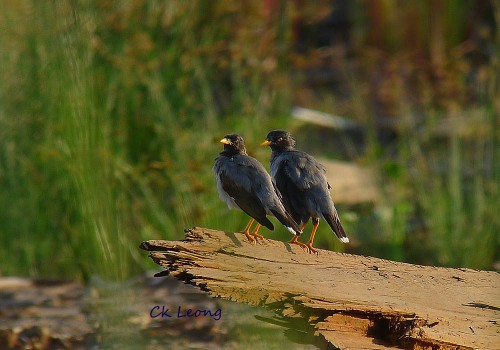
Pale-bellied Myna

It was a long journey to see the Pale-bellied Myna Acridotheres cinereus.  At the moment the only place in Sabah for this bird is in Tinagat beach near Tawau.  Originally from South Sulawesi, this species has established itself here with a population approaching 100 strong.  As with other mynas and starlings, they have stayed near humans and cultivation.  Whether they will follow the road of the Javan Myna remains to be seen, the Javan having established itself along the roads and oil palm estates of the East Coast of Sabah in a few short years after arrival.

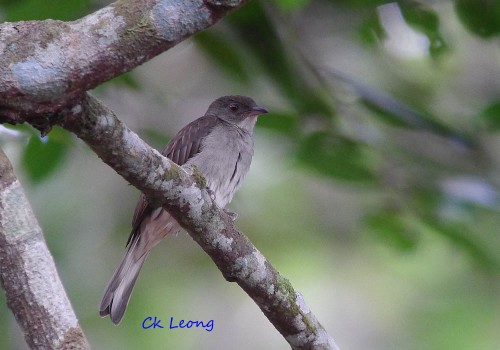
Malaysian Honeyguide

The Malaysian Honeyguide Indicator archipelagicus is a scarce bird of the lowland dipterocarp forest of South-east Asia.  The male has a tendency to stay in the same area for extended periods where it announces its presence with its most extraordinary calls.  Each call starts with a miau note followed by a long mechanical sounding rattle.  This is repeated over long periods.

The scarcity of the bird has it classified as near-threatened.  Due to its strong territorial habits, please do not use playback for this bird.